
Tage der Restaurierung - zwei exklusive Programme für Restaurator:innen
Anlässlich des heurigen Europäischen Tages der Restaurierung bietet der ÖRV in Kooperation mit dem Wien Museum und der Akademie der bildenden Künste Wien zwei exklusive Programme in der Hermesvilla an:
Wanddekoration und Holzimitation – historische Techniken in der Hermesvilla
16. Oktober 2026, 10:00–12:00 Uhr
Anhand der historischen Ausstattung der Hermesvilla werden Materialien, Dekorations- und Holzimitationstechniken des Historismus sowie aktuelle Forschungsergebnisse vorgestellt und direkt am Objekt diskutiert.
Raumausstattung und Bildhauerei von Viktor Tilgner – historische Techniken in der Hermesvilla
16. Oktober 2026, 13:00–14:00 Uhr
Im Mittelpunkt stehen die Ausstattung des Tilgnersaals und das bildhauerische Werk Viktor Tilgners. Das Wien Museum gibt Einblicke in aktuelle Untersuchungen und Forschungsergebnisse.
Beide Veranstaltungen richten sich an Fachleute aus der Restaurierung, die Teilnahme ist kostenlos.
Bitte beachten Sie, dass die Teilnehmerzahl begrenzt ist.
Anmeldung bis 14.10.2026 an:
Darüber hinaus ist selbstverständlich jeder herzlich eingeladen, am Gesamtprogramm des Wien Museums zum Europäischen Tag der Restaurierung teilzunehmen. Informationen und Anmeldung unter: Wien Museum – Tage der Restaurierung
Wir freuen uns auf die spannenden Programme und den fachlichen Austausch!
9. Europäischer Tag der Restaurierung
Europaweit öffnen Restaurator ihre Ateliers, Werkstätten und Projekte für die Öffentlichkeit und geben Einblicke in ihre Arbeit. Wenn Sie eine Veranstaltung planen, freuen wir uns über Ihre Informationen zur Veröffentlichung über die Kanäle des ÖRV.
ÖRV- Jour fixe Restauratorische Planung und Umsetzung der Modeausstellung Farbenspiel – Mode aus vier Jahrhunderten im Wien Museum
Die neue Sonderausstellung „Farbenspiel – Mode aus vier Jahrhunderten“ im Wien Museum erzählt anhand von rund 350 Kleidungsstücken aus der einzigartigen Modesammlung des Museums eine faszinierende Kulturgeschichte der Mode.
Im Rahmen des ÖRV Jour Fixe führt die Textilrestauratorin Britta Schwenck durch die Ausstellung und gewährt einen Blick hinter die Kulissen. Als verantwortliche Restauratorin für die Erhaltung und Präsentation der ausgestellten Objekte berichtet sie über die konservatorischen Herausforderungen bei der Vorbereitung einer Ausstellung dieser Größenordnung – von der Ausstellungsarchitektur und den räumlichen Rahmenbedingungen über Transport und Montage bis hin zur konservatorisch geeigneten Präsentation der zahlreichen textilen Objekte.
Das Wien Museum lädt alle Mitglieder des ÖRV im Rahmen des Jour Fixe zu einem kostenlosen Besuch der Sonderausstellung ein.
Bitte beachten Sie, dass die Teilnehmerzahl begrenzt ist.
Anmeldung bis 20.10.2026 an:
Werkstattgespräch: Umgang mit Textilien in Museen
Textilien gehören zu den empfindlichsten Objekten in musealen Sammlungen. Ob historische Kleidung, Fahnen oder textile Alltagsgegenstände – ihr Erhalt erfordert besonderes Fachwissen und Sorgfalt.
Worum geht es?
In diesem Werkstattgespräch erhalten Sie umfassende Einblicke in den fachgerechten Umgang mit Textilien im Museum. Eva Schantl, akademische Restauratorin mit Spezialisierung auf Textilien, vermittelt praxisnahes Wissen zu allen wesentlichen Aspekten der Textilpflege und -präsentation.
Zunächst klären wir grundlegende Fragen: Was zählt überhaupt zu Textilien im musealen Kontext? Ein Schwerpunkt liegt auf vorbeugenden Maßnahmen: Wie und womit reinigt man Textilien im Museum? Worauf muss man bei der Präsentation achten? Wie und wodurch entstehen Schäden an historischen Stoffen?
Unsichtbar und ungebeten: Wenn Motten und Käfer in Samt und Seide einziehen, ist Detektivarbeit gefragt. Wir werden gemeinsam einen Blick hinter die Kulissen des musealen Schädlingsmanagements werfen und Fragen wie die folgenden beantworten: Wie erkenne ich Befallsspuren? Welche Sofortmaßnahmen kann ich ergreifen und was kann ich präventiv tun, um die ungebetenen Gäste erst gar nicht ins Haus zu bekommen?
Mit
Eva Schantl, Restauratorin für Textilien
Anmeldung
E-Mail:
Veranstaltet von:
Museumsforum Steiermark
Weitere Inormationen findet ihr unter folgendem Link:
Programm: 20 Museen und 1 Zoo in Graz und der Steiermark
Fachgespräch: Gotische Möbel im kulturellen Kontext
Das Salzburg Museum lädt in Kooperation mit dem Bundesdenkmalamt im Rahmen der Ausstellung „Meisterwerke der Möbelkunst – Salzburg 1450–1500" zum Fachgespräch im Bergbau- & Gotikmuseum Leogang. Unter der Leitung von Eva Hody (Landeskonservatorin für Salzburg, Bundesdenkmalamt) und Peter Husty (Ausstellungs- und Chefkurator Salzburg Museum) beleuchten Fachleute das Thema in kurzen Fachvorträgen und einer gemeinsamen Diskussion.
Anmeldung bis 9.10.2026 erforderlich:
Weitere Informationen findet ihr unter:
Fachgespräch: Gotische Möbel im kulturellen Kontext
23rd Eurographics Workshop on Graphics and Cultural Heritage (GCH 2026)
The 23rd Eurographics Workshop on Graphics and Cultural Heritage (GCH 2026) will take place in Barcelona, Catalonia from November 2nd to November 5th at Universitat Politècnica de Catalunya.
GCH brings together researchers, professionals, and institutions dedicated to the preservation, analysis, and communication of cultural heritage through computer graphics and visual technologies.
Hosted in Barcelona — a city where history, art, and innovation meet — this edition will provide a vibrant forum to exchange ideas, present new research, and explore emerging methods for digital engagement with our shared heritage.
We warmly invite you to join us in Barcelona to help shape the future of cultural heritage in the digital age.
Weitere Informationen findet ihr unter folgedem Link:
GCH 2026 - Graphics and Cultural Heritage. Barcelona, November 2-5 | GCH 2026 – Barcelona, November 2–5
denkmal – Europäische Leitmesse für Denkmalpflege, Restaurierung und Altbausanierung
Die denkmal bringt alle zwei Jahre Fachleute, Institutionen, öffentliche Auftraggeber, Restauratorinnen und Restauratoren, Architekturbüros, Handwerksbetriebe, Wissenschaft und Denkmaleigentümer aus zahlreichen Ländern in Leipzig zusammen.
Neben der Fachausstellung bietet die denkmal ein umfangreiches internationales Fachprogramm mit Vorträgen, Tagungen, Workshops und zahlreichen Möglichkeiten zum fachlichen Austausch.
Informationen zur denkmal:
https://www.denkmal-leipzig.de/
Aussteller & Produkte:
https://www.denkmal-leipzig.de/de/aussteller-produkte/
Fachprogramm:
https://www.denkmal-leipzig.de/de/programm/
Workshop: Künstliche Intelligenz und Denkmalpflege
Künstliche Intelligenz (KI) hat bereits enormen Einfluss auf unseren Alltag genommen und gewinnt natürlich auch für die Denkmalpflege stetig an Bedeutung: KI-Technologien werden z. B. für Klassifizierungs- und Annotationsaufgaben in der Verwaltung, zur Schadens- und Mustererkennung in der konservatorischen Praxis oder zur Zustandsbewertung von Kulturgut eingesetzt. Somit kann KI die Denkmalpflege dabei unterstützen, Daten effizienter zu analysieren, Restaurierungsprozesse zu optimieren und Erhaltungszustände präzise zu überwachen. Beim Einsatz von KI in der Wissensvermittlung bestehen Risiken durch Fehlinformationen sowie rechtliche und ethische Fragestellungen. Darüber hinaus hängt die Zuverlässigkeit von KI-Anwendungen maßgeblich von der Qualität und semantischen Erschließung der zugrundeliegenden Datensätze ab. Gerade bei heterogenen und sensiblen Kulturdaten ist eine sorgfältige Datenaufbereitung unerlässlich, um verantwortungsvolle und wirksame Einsatzmöglichkeiten in Denkmalschutz und Denkmalpflege zu gewährleisten.
Weitere Informationen findet ihr im Anhang: cfp_2026_workshop_ki_und_denkmalpflege.pdf
Das grüne Museum Museen, Archive, Depots: Nachhaltig planen, bauen und betreiben
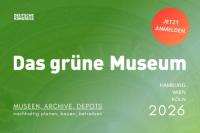
Nachhaltigkeit ist ein zentrales Thema für Museen, Archive und Depots. Diese Institutionen bewahren Kulturgüter über Generationen hinweg – langfristiges Denken und verantwortungsvoller Ressourceneinsatz sind daher essenziell. Gleichzeitig stehen Bauprojekte wie Erweiterungen, Neubauten oder Umbauten unter erheblichem Innovations- und Kostendruck.
Wie lassen sich Nachhaltigkeit, Denkmalpflege und moderne Bauanforderungen vereinen? Soll ein Archiv oder Depot auf der grünen Wiese entstehen oder in einem denkmalgeschützten Bestandsbau? Welche Anforderungen ergeben sich aus der präventiven Konservierung? Diese und viele weitere Fragen stehen im Mittelpunkt von Das grüne Museum 2026.
Call for proposals open! - The age of photographs. 50 years of image preservation.
rom the moment they were introduced, photographs were seen as fragile objects and their instability soon attracted the attention of scientists and photographers. During the industrial revolution, manufacturers took up the challenge of developing sensitive surfaces; and by the end of the 20th century, conservation institutes were conducting their own research into the conservation of this new heritage object. The use of photography in a wide variety of processes, and its materialization on different media, raises many questions about the characteristics of objects and their preservation, at a time when the need for green transition is forcing us to open up new research paths into the conservation of cultural heritage artefacts. Therefore, photography is now facing technical, scientific, ecological, and societal challenges. This symposium intends to build a narrative of 50 years of research into the preservation of photographic heritage, while taking part in the development of a forward-looking approach to these new conservation challenges.
It is aimed at conservation scientists, curators, collection managers, conservators of photographs and photography historians. It is part of the French Ministry of Culture's bicentennial celebration of photography, which is taking place in 2026-2027. The conference languages are French and English, and simultaneous interpretation will be provided.
The program is structured into three sessions. The first one seeks to provide a comprehensive overview of the evolution of concerns regarding the materiality of photographs. The goal is at the same time to enhance our knowledge of the collections and to understand the objects themselves, with the aim to improve their conservation. The second session will explore the evolution of conservation practices with a focus on the consideration of the objects’ degradation as a component of their historical significance. Preventive and remedial conservation as well as restoration will be studied in terms of methodological differences, particularly at international level. The third prospective session will examine considerations relating to the ways in which photographs are acquired and exhibited. The conservation and exhibition conditions will be discussed from the first official recommendation of the 1980s, till the recent reassessment in the context of ecological transition.
We invite the whole community to submit contributions (*) in French or English before January 15, 2026, either for:
- an oral communication, the content of which should explore the recent history of photograph preservation or its future prospects
- a poster presentation that focuses on a more specific research topic, in line with one of the above-mentioned themes.
We recommend that you register as soon as possible.
Weitere Informationen findet ihr unter folgendem Link:
Le temps des épreuves. 50 ans de préservation des photographies - Sciencesconf.org


