
Farbgeschichten – von Purpur, Smalte und Giftgrün
Die Ausstellung des Bundesdenkmalamtes widmet sich der Herstellung und Verwendung von Farben sowie der Farbsymbolik im Laufe der Jahrhunderte und lädt zur Spurensuche in der Kartause Mauerbach ein.
Farbschichten erzählen Geschichten von Schönbrunnergelb bis Giftgrün, sozialen Bedeutungen und ästhetischen Vorlieben vergangener Zeiten. In der Denkmalpflege sind Farbschichten weit mehr als dekorative Oberflächen, sie sind bedeutende Zeugnisse unseres kulturellen Erbes.
Die Ausstellung des Bundesdenkmalamtes widmet sich der Herstellung und Verwendung von Farben sowie der Farbsymbolik im Laufe der Jahrhunderte.
Weitere Informationen findet ihr unter folgendem Link:
Farbgeschichten – von Purpur, Smalte und Giftgrün
Call for Papers: XVI. IADA Congress 2027
Join us for IADA’s historic milestone in Basel, Switzerland, as we celebrate 70 years of IADA at the XVI International Congress, 23–27 August 2027.
The International Association of Book and Paper Conservators (IADA) Congress founded in 1957 as AdA has served as a quadrennial forum for research and development in paper and book conservation since 1967. Each Congress strives to offer diverse, comprehensive, and cross-disciplinary presentations spanning preservation, conservation, collections care, and the research and analysis of the world’s documentary heritage and related disciplines.
Date: 23-27 August 2027
Venue: uptownHall Arlesheim (Basel), Switzerland
Abstract submission deadline: 15 October 2026
Submit abstracts here:
https://easychair.org/conferences/?conf=iada2027
You will need to create a free EasyChair account to submit.
Weitere Informationen findet ihr im Anhang: callforpapers-iada-congress2027.pdf
Call for Papers - IADA
ChemiNova Final Pilot to Take Place in Vienna This September
The ChemiNova project is approaching one of its most significant milestones: the final project pilot, which will bring together the entire consortium in Vienna from 21 to 26 September 2026.
As the project enters its final phase, this pilot will provide an important opportunity for researchers, technology experts and cultural heritage professionals from across Europe to meet, collaborate and consolidate the results achieved throughout the project.
The Vienna pilot will mark the culmination of ChemiNova’s core activities, including its Capacity Building programme, the development and testing of the Chemitools suite, and a series of Data Acquisition campaigns carried out across the project’s pilot sites.
Weitere Informationen findet ihr unter:
ChemiNova Final Pilot to Take Place in Vienna This September - ChemiNova
ChemiNova Open Event in Vienna
Lernen Sie ChemiNova kennen und tragen Sie zum Schutz des europäischen Kulturerbes bei!
Wir freuen uns sehr, Sie zum ChemiNova Open Event einzuladen – einem ganz besonderen Nachmittag voller Entdeckungen, interaktiver Aktivitäten und Spaß!
- Wann: 22. September 2026, von 16:00 bis 18:00 Uhr
- Wo: Schloss Schönbrunn, Wien, Österreich
Diese Veranstaltung wird von der NGO DIADRASIS organisiert und von der 4D-IT GmbH sowie der Schönbrunn Group im Rahmen ihrer zweiten Pilotaktivität in Wien ausgerichtet. Das Event zeigt auf anschauliche Weise, wie Wissenschaft und Kultur Hand in Hand arbeiten, um das europäische Erbe vor dem Klimawandel und zivilen Konflikten zu schützen.
Was erwartet Sie?
- Stellen Sie Ihren Detektivsinn unter Beweis: Lösen Sie Rätsel und decken Sie verborgene Geheimnisse unseres Kulturerbes auf.
- Entdecken Sie digitale Tools: Erfahren Sie, wie moderne Technologien den Schutz von Kulturschätzen revolutionieren.
- Probieren Sie es selbst aus: Testen Sie interaktive Tools, die vom ChemiNova-Team entwickelt wurden.
- Netzwerken Sie: Treffen Sie Wissenschafter:innen und Denkmalschutz-Expert:innen.
- Machen Sie mit: Nehmen Sie an Mitmach-Aktionen teil und werden Sie als Bürger:in aktiv im Naturschutz und der Denkmalpflege.
Die Aktivitäten finden parallel im selben Zeitraum statt.
Die Teilnahme ist kostenlos, eine Registrierung ist jedoch erforderlich. Die Veranstaltungssprache ist Englisch.
Das ChemiNova 2026 Open Event in Wien wird in Zusammenarbeit mit der FORTHEM Alliance organisiert. Dank dieser Partnerschaft sind alle Studierenden der Allianz-Universitäten herzlich eingeladen, an der Veranstaltung teilzunehmen. Das Event bietet Raum, um Wissen, Erfahrungen und neue Perspektiven zu Forschung und Innovation auszutauschen.
Bitte beachten Sie, dass ChemiNova keine Reise-, Unterkunfts- oder Verpflegungskosten für die Veranstaltung übernimmt. Teilnehmer:innen, die für das Event anreisen, müssen diese Kosten selbst tragen.
Seien Sie dabei und nutzen Sie diese einzigartige Gelegenheit, um zu lernen, zu experimentieren und aktiv zum Schutz des europäischen Kulturerbes beizutragen!
Weitere Informationen findet ihr unter:
ChemiNova 2026 Open Event - Vienna, Austria
ÖRV - Erstes Westösterreich-Treffen des ÖRV
In Wien finden regelmäßige Jour Fixe statt – nun soll erstmals auch für Westösterreich ein Rahmen geschaffen werden, in dem sich Restauratorinnen und Restauratoren begegnen, austauschen und vernetzen können.
Der Berufsverband Österreichischer Restauratorinnen und Restauratoren lädt herzlich zum ersten regionalen Treffen in Innsbruck ein. Wir freuen uns, dafür dankenswerterweise die Räumlichkeiten des Landeskonservatoriums Tirol nutzen zu dürfen.
Das Treffen findet am 24. September von 14:30 bis 18:30 Uhr statt. Das Programm gliedert sich in zwei Blöcke, zwischen denen eine Kaffeepause eingeplant ist. Im ersten Block stehen zwei Fachvorträge zum Thema Notfallmanagement auf dem Programm: Die selbstständige Restauratorin Judith Emprechtinger spricht über Notfallmanagement an Museen, Jessica Roßmann als Vertreterin des BDA Wien beleuchtet das Thema aus denkmalpflegerischer Perspektive. Im zweiten Block findet eine moderierte Vernetzungsrunde statt. Der vollständige Ablauf wird noch veröffentlicht.
Beide Blöcke können unabhängig voneinander besucht werden – wer nur einen Teil wahrnehmen kann, ist ebenso herzlich willkommen.
Im Anschluss besteht die Möglichkeit, gemeinsam Abendessen zu gehen oder etwas zu trinken.
Für wen?
Die Veranstaltung ist offen für alle Mitglieder des ÖRV. Einmalig laden wir auch Nicht-Mitglieder ein, die an der Arbeit des Verbandes interessiert sind und sich mit seinen Werten und Zielen identifizieren können.
Anmeldung erforderlich
Die Teilnahme ist nur mit Anmeldung möglich. Anmeldungen bitte bis 21. September 2026 per E-Mail an:
Wir freuen uns auf einen Nachmittag, der nicht nur informiert, sondern verbindet.
Tag des Denkmals 2026 unter dem Motto Denkmale: Wert für alle.
Der Tag des Denkmals am 27. September 2026 übernimmt die Schwerpunktsetzung des Bundesdenkmalamtes und macht Denkmalwerte sichtbar, erlebbar und begehbar.
Auch in diesem Jahr öffnen wieder hunderte Programmpartner:innen in ganz Österreich kostenlos die Türen zu ihren Denkmalen oder bieten interessante Touren zu Denkmalen an. Viele dieser Denkmale sind sonst nicht oder nur eingeschränkt zugänglich. Der Tag des Denkmals macht das kulturelle Erbe Österreichs für alle sichtbar, erlebbar und begehbar und zeigt die Vielfalt und Unterschiedlichkeit des kulturellen Erbes sowie den Wert für die Gesellschafft.
Informationen zum Programm (ganz Österreich) fidet ihr unter:
Tag des Denkmals 2026 unter dem Motto Denkmale: Wert für alle.
Tag des Denkmals
Das grüne Museum Museen, Archive, Depots: Nachhaltig planen, bauen und betreiben
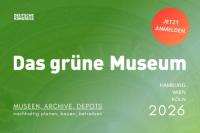
Termine 29.09.2026, Hamburg | 15.10.2026, Wien | 10.11.2026, Köln
Nachhaltigkeit ist ein zentrales Thema für Museen, Archive und Depots. Diese Institutionen bewahren Kulturgüter über Generationen hinweg – langfristiges Denken und verantwortungsvoller Ressourceneinsatz sind daher essenziell. Gleichzeitig stehen Bauprojekte wie Erweiterungen, Neubauten oder Umbauten unter erheblichem Innovations- und Kostendruck.
Wie lassen sich Nachhaltigkeit, Denkmalpflege und moderne Bauanforderungen vereinen? Soll ein Archiv oder Depot auf der grünen Wiese entstehen oder in einem denkmalgeschützten Bestandsbau? Welche Anforderungen ergeben sich aus der präventiven Konservierung? Diese und viele weitere Fragen stehen im Mittelpunkt von Das grüne Museum 2026.
Nachwuchs gesucht! Zukunft Restaurierung - Herbsttagung des Arbeitskreises Konservierung/Restaurierung
Die Restaurierung steht an einem Wendepunkt: Der Nachwuchs schwindet, Studiengänge werden eingestellt, und die Vergütung hält nicht Schritt mit einem Berufsfeld, das wissenschaftlich hochqualifiziert arbeitet und große gesellschaftliche Verantwortung trägt.
Haben wir ein Nachwuchsproblem – und wie können wir ihm begegnen? Diese Frage ist dringlich. Zugleich eröffnet sich die Chance, das Berufsfeld neu zu denken, seine Stärken klarer zu zeigen und seine Zukunft aktiv zu gestalten.
Die Herbsttagung des Arbeitskreises Konservierung / Restaurierung im Deutschen Museumsbund (DMB) lädt vom 7. bis 8. Oktober 2026 zu einer Online-Tagung ein, um genau darüber ins Gespräch zu kommen. Gemeinsam mit dem Verband der Restauratorinnen (VDR) werden Ursachen analysiert, Erfahrungen zusammengeführt und konkrete Strategien entwickelt.
Vertreter aus Museumsrestaurierung, Denkmalpflege, Selbstständigkeit und Hochschulen sowie Studierende bringen ihre Perspektiven ein, diskutieren Herausforderungen und entwickeln gemeinsam Ansätze, um Ausbildung und Berufsbild langfristig zu stärken.
Zum Abschluss entsteht ein gemeinsames Statement vom Arbeitskreis Konservierung / Restaurierung im DMB und VDR mit klaren Appellen und konkreten Handlungsempfehlungen.
Denn die Zukunft der Restaurierung liegt in unserer Hand. Wenn es gelingt, Kräfte zu bündeln und entschlossen zu handeln, kann ein Berufsfeld gestärkt werden, das für den Erhalt unseres kulturellen Erbes von zentraler Bedeutung ist.
Weitere Informationen findet ihr unter:
Nachwuchs gesucht! Zukunft Restaurierung – Deutscher Museumsbund e.V.
3. KEK-Tagung: Demokratie sichern
Am 8. Oktober 2026 laden wir Sie herzlich zur 3. KEK-Tagung ein, in der die gemeinsamen Handlungsfelder von Kulturgutschutz und Demokratiesicherung beleuchtet werden.
In Archiven, Bibliotheken und anderen Gedächtniseinrichtungen lagern bundesweit gefährdete Originale, die Meinungsvielfalt, Rechtsordnungen, historische Entwicklungen und politisches Handeln dokumentieren. Der Erhalt dieser Überlieferungen ist Grundvoraussetzung für eine quellen- und faktenbasierte Forschung, eine historische Aufarbeitung sowie die Sichtbarmachung gesellschaftlicher Mehrstimmigkeit und Diskurse. Originalerhalt ist grundlegender Bestandteil der Informationssicherung und ein wichtiger Beitrag zu einer lebendigen, urteilsfähigen und wehrhaften Demokratie – insbesondere angesichts der zunehmenden Bedrohung durch hybride Desinformation und andere demokratiegefährdende Entwicklungen.
Die Veranstaltung eröffnet mit der von Vladimir Balzer (Deutschlandradio) moderierten Podiumsdiskussion "Politische Relevanz des Originalerhalts" (10:00–12:00 Uhr). Am Nachmittag folgen Fachvorträge zu den Themenfeldern "Überlieferungen bewahren – Erinnerungskultur, Aufarbeitung und Demokratie" (13:30–15:00 Uhr) sowie "Kulturgutschutz und Originalerhalt in der Praxis" (16:00–17:30 Uhr). An die Tagung schließt sich die Abendveranstaltung "Original gelesen" an. Weitere Informationen folgen in Kürze.
Weitere Informationen findet ihr unter: KEK-Portal | 3. KEK-Tagung: Demokratie sichern
Das grüne Museum Museen, Archive, Depots: Nachhaltig planen, bauen und betreiben
Termine: 15.10.2026, Wien | 10.11.2026, Köln
Nachhaltigkeit ist ein zentrales Thema für Museen, Archive und Depots. Diese Institutionen bewahren Kulturgüter über Generationen hinweg – langfristiges Denken und verantwortungsvoller Ressourceneinsatz sind daher essenziell. Gleichzeitig stehen Bauprojekte wie Erweiterungen, Neubauten oder Umbauten unter erheblichem Innovations- und Kostendruck.
Wie lassen sich Nachhaltigkeit, Denkmalpflege und moderne Bauanforderungen vereinen? Soll ein Archiv oder Depot auf der grünen Wiese entstehen oder in einem denkmalgeschützten Bestandsbau? Welche Anforderungen ergeben sich aus der präventiven Konservierung? Diese und viele weitere Fragen stehen im Mittelpunkt von Das grüne Museum 2026.


